Published Updated
A hidden leak rarely announces itself. There is no burst, no flood, no obvious puddle. Water escapes quietly inside a wall or under a slab for weeks, and the first real evidence is a bill that makes you sit down.
Perth homes are particularly good at hiding leaks. Slab-on-ground construction is the norm, sandy soil swallows escaping water without pooling, and reticulation runs underground across most suburbs. Here are the eight signs worth knowing, roughly in the order people notice them.
1. The bill jumped and nothing else changed
Same number of people, same showers, same garden, and the water use figure has doubled. This is the single most common trigger for a detection call-out. Compare the kilolitre figure on your bill against the same quarter last year rather than the dollar amount, since rates change and usage tells the truer story.
2. The meter moves with everything turned off
This is the test that settles it, and it costs nothing. Turn off every tap, appliance and reticulation controller in the house. Go to the meter and watch the smallest dial. If it is creeping, water is leaving the system somewhere.
Note the reading, wait an hour with everything still off, and read it again. A change confirms a leak and gives you a rough sense of scale.
3. A warm patch on the floor
Walk your house barefoot. A section of tile or timber that is noticeably warmer than the floor around it usually means a hot water line is leaking under the slab. It is one of the more reliable signs because there is no innocent explanation for it.
4. Damp patches, staining or bubbling paint
Look along skirting boards, at the base of walls, and on ceilings under wet areas upstairs. Paint that is blistering, render that is bubbling, or a stain that slowly grows are all signs water is tracking through the structure.
The visible mark is often not above the leak. Water follows the path of least resistance and can travel a surprising distance before it surfaces, which is exactly why guessing and cutting is such an expensive way to find it.
5. A musty smell that will not go away
Persistent damp smell in a room, a cupboard or a hallway, especially one that gets worse in cooler months, points at moisture sitting somewhere it should not. Mould appearing in a spot with no obvious water source is the same signal.
6. Water pressure has dropped
If pressure has fallen across the whole house rather than at one tap, and the supply into the property has not changed, water may be escaping before it reaches your fixtures. Pressure loss on its own has other causes, so treat it as a prompt to check the meter rather than proof.
7. You can hear running water when nothing is on
A faint hiss or trickle in a quiet house, particularly at night, is worth taking seriously. Put an ear against a wall in a few spots. People often dismiss this one for months before something else forces the issue.
8. A green patch, soft ground or lifting paving
Outside, look for a stretch of lawn that is greener and thicker than everything around it during a dry spell, ground that stays soft or spongy underfoot, or paving and driveway sections that have started to sink, lift or crack.
In Perth’s sandy soil an underground leak often washes fines away and undermines whatever is sitting on top, so movement in paving can be the first visible symptom of a pipe that failed months ago.
What to do if you have ticked two or more
Do the meter test first. It is free, it takes an hour, and it turns a suspicion into a fact.
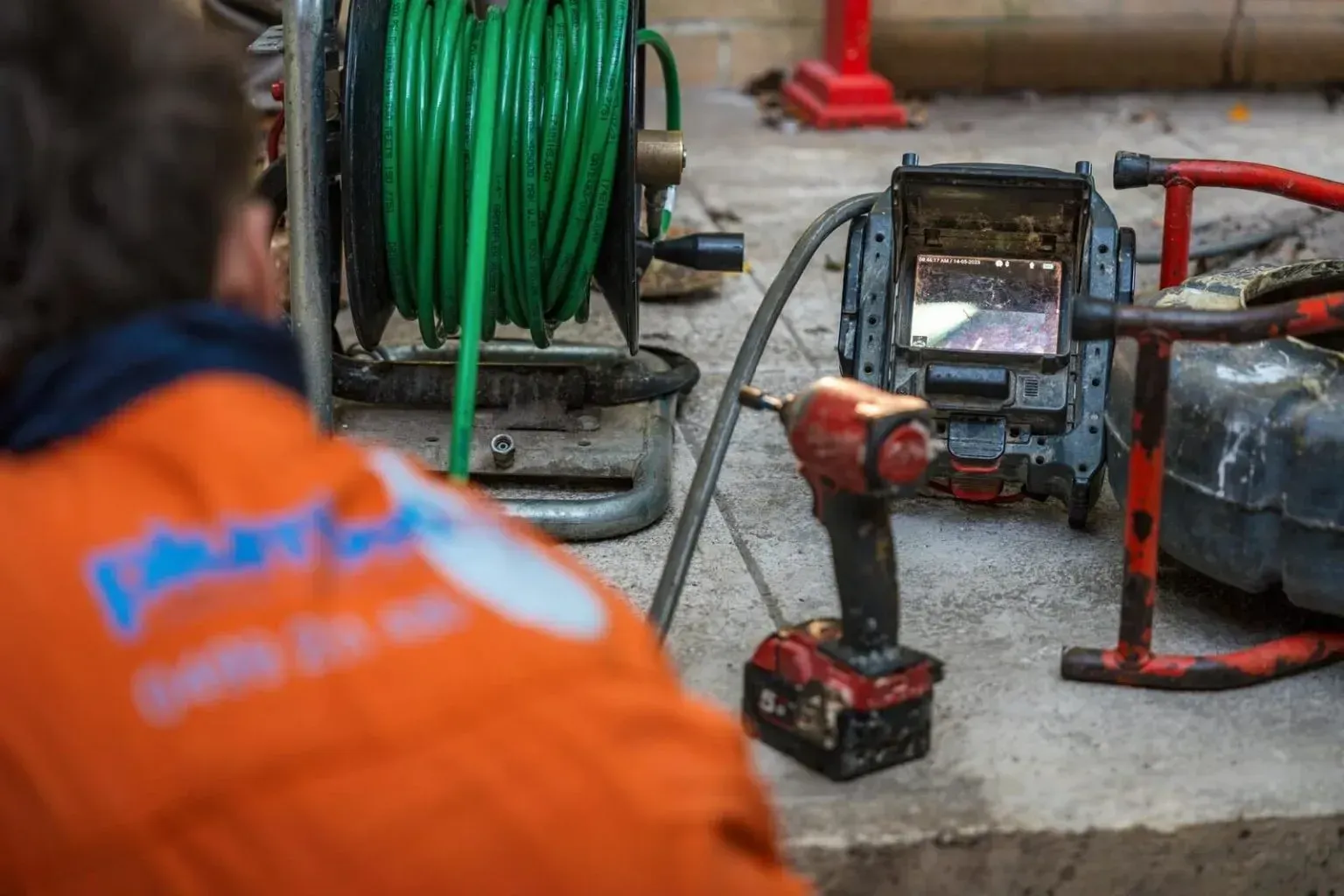
If the meter confirms a leak, the next step is locating it, not opening things up to look. We use acoustic correlation, FLIR thermal imaging and hydrogen-nitrogen tracer gas to pinpoint a leak to within 10mm before any tile, slab or driveway is touched. You get a written report with the location documented.
Detection starts at $395 for the first hour. If we cannot find a leak greater than 10 litres per hour, audible or weeping water, there is no charge for the visit. We do not do the repair ourselves. Once the leak is located, a licensed plumber we coordinate carries out the work, often our parent company Plumbed Right, and it is quoted in writing before anything starts.
One more thing worth knowing: if the leak was genuinely hidden and your bill crossed Water Corporation’s threshold, you may be able to claim back up to half the water you lost. Our guide explains how to apply for the Water Corporation leak allowance. Ask us about the leak allowance when we attend.
Suspect a leak in Joondalup or the northern suburbs? See our Joondalup leak detection page. Anywhere else in Perth, call 0482 096 044.