
Membrane, seal or pipe?
Shower and bathroom leak detection in Perth
Shower and bathroom leak detection in Perth starts with one question: is the water coming from the shower itself, or from a pipe inside the wall or floor? We test both, document what we find, and tell you which trade needs to fix it. Scope and price are confirmed before you book.
- PL7390 Plumbing Licence
- GF13592 Gas Permit
- Master Plumbers WA
- A Plumbed Right Company
- 5.0 star Google reviews
Two different leaks behind the same tiles
A leaking shower and a leaking pipe in the shower wall can leave the same damp patch. They are different faults, fixed by different trades.
A shower leak is usually a failed waterproofing membrane, cracked grout or a perished seal. A pipe leak comes from the hot or cold supply lines in the wall, the mixer connections, or the waste pipe under the floor.
- Membrane, grout or seal failure: a waterproofer or tiler
- Supply or waste pipe: a licensed plumber
- Not sure which: that is what detection answers
Bathroom leak detection, source by source
A bathroom has several places water can escape. Each one behaves differently, and each one points to a different repair.
The waterproofing membrane
Grout and silicone seals
The floor waste and waste pipe
The mixer and supply pipes
Where a shower leak shows up
Water from a shower rarely shows up where it escapes. Where you see it is a clue to where it started.
Swollen skirting or door frames
A damp wall in the next room
A ceiling stain below
Damp carpet or floor coverings
Lifting or hollow floor tiles
A musty smell or a higher bill
Why your water meter is a useful clue
A membrane leak only loses water while someone is showering. A supply pipe is under mains pressure all day, so it keeps leaking when every tap is off.
Points to the shower itself
- Damp appears or grows after showers.
- The water bill looks normal.
- Staining starts low, near the tray or floor waste.
Points to a pipe in the wall
- The water meter moves with every tap off.
- The damp stays when the shower has not been used.
- The bill has climbed without a change in use.
These clues narrow it down. They do not confirm it. A leaking waste pipe, for example, also only leaks while the shower drains. Testing is what separates them.
Simple checks you can do before booking
None of these needs tools or opening anything up. Note what you find, because it helps us confirm the scope when you call.
-
Do the meter test
Turn off every tap and water-using appliance, note the meter reading and wait ten minutes. If it moves, a pressurised pipe is losing water. Our high water bill page walks through the test step by step.
-
Stop using that shower for a few days
Use another bathroom if you have one. If the damp patch stops growing or starts to dry, the water is most likely coming from the shower while it runs, not from a supply pipe.
-
Look closely at the grout and silicone
Check the wall and floor junction, the corners, the shower screen and the floor waste for cracked or missing grout, gaps, and black mould in the silicone.
-
Mark and photograph the damp
Trace the edge of the damp patch lightly in pencil and take a dated photo. If it grows after showers, that pattern is useful evidence for us and for your insurer.
These checks narrow down the cause. They do not confirm it. The detection visit is what separates a membrane, seal, waste or supply pipe leak.
How we separate a membrane leak from a pipe leak
-
Check the meter and the history
Your water meter, bill and the timing of the damp show whether a pressurised pipe is losing water.
-
Test the pipes on their own
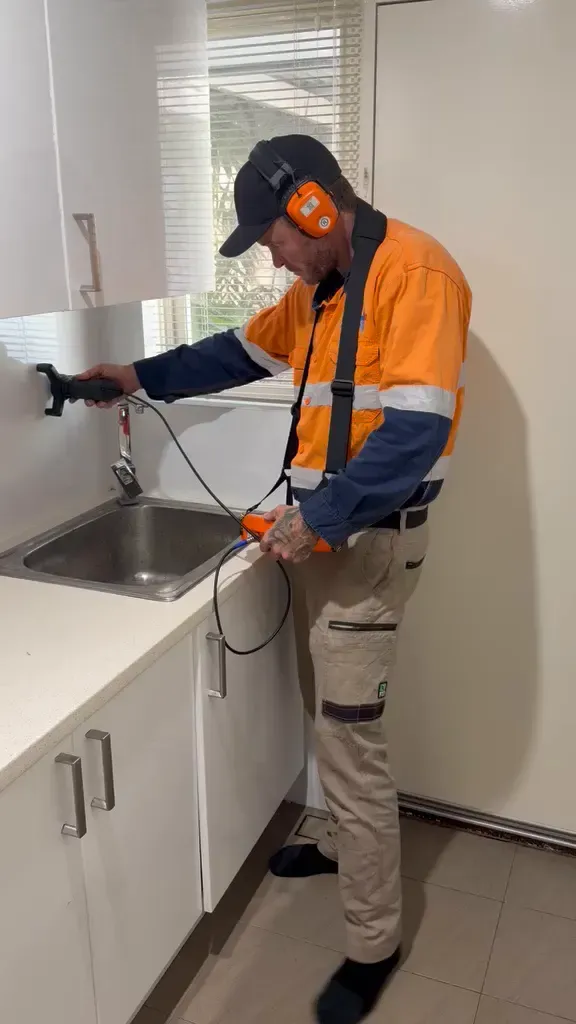
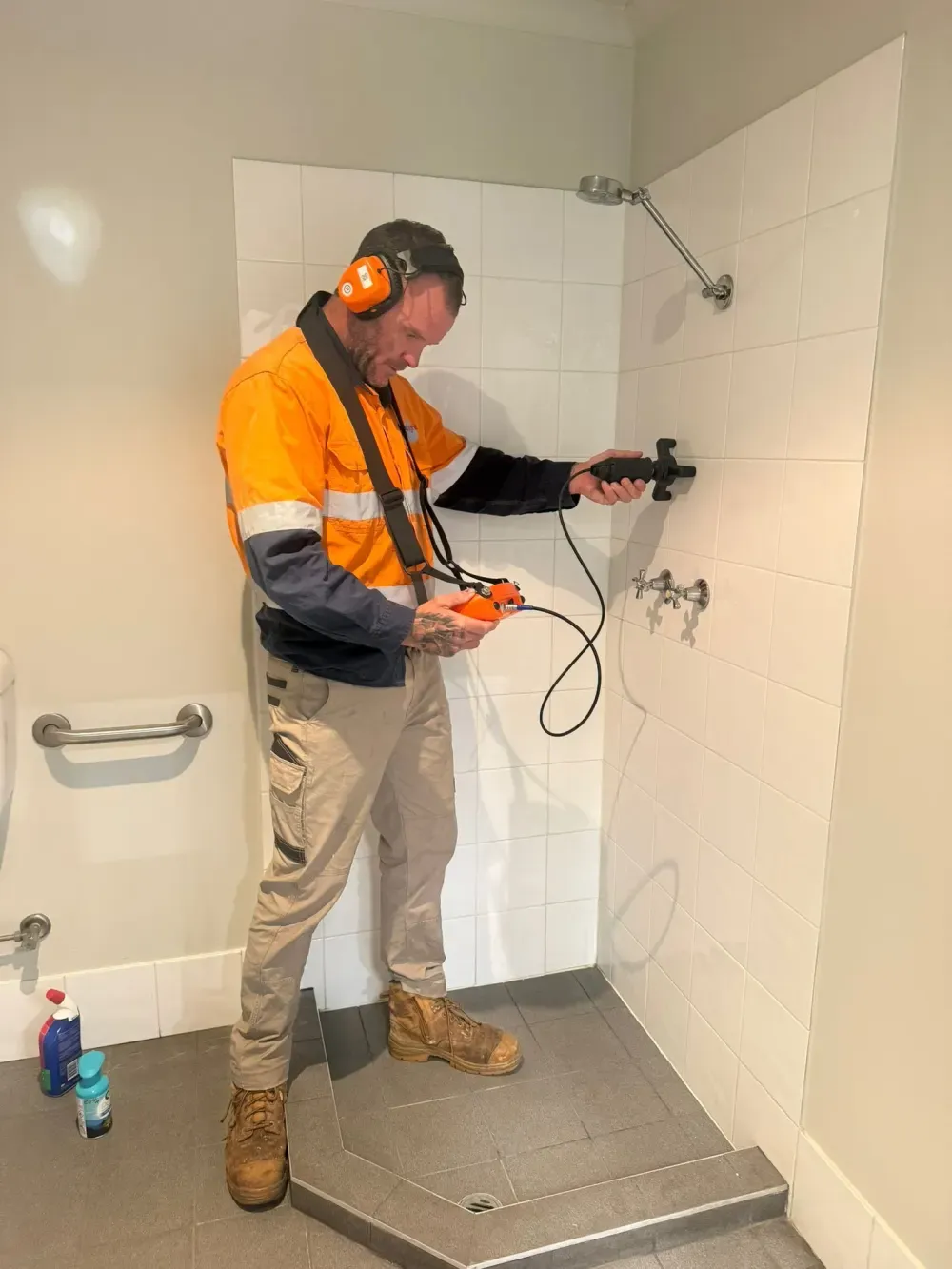
With the shower off, we listen along the hot and cold lines with acoustic equipment. Water escaping a pressurised pipe makes a sound a dry membrane does not.
-
Scan the wall with thermal imaging
A FLIR camera shows warm patterns along a leaking hot water line, and cooler areas where water has soaked into the wall.
-
Map the moisture
Moisture readings around the shower and the rooms next door show how far the water has travelled.
-
Run the shower and compare
If the pipes test sound, we run the shower and watch where damp appears. That points to the membrane, the grout or the waste.
We find and document the leak. We do not repair it on the same visit. A licensed plumber repairs pipe leaks, often through our parent company Plumbed Right, and a waterproofer or tiler handles membrane and tile failures.
After the leak is found
Detection ends with a clear answer and a written report. The repair is a separate job, quoted by the trade who does it.
What we do
- Locate the source with non-destructive testing.
- Record the location, the method used and photos in a written report.
- Tell you which trade the repair needs.
What happens next
- A pipe leak is quoted and repaired by a licensed plumber, often Plumbed Right.
- A membrane, grout or seal failure is quoted by a waterproofer or tiler.
- You can send the report to your insurer before the repair goes ahead.
If the leak turns out to be a concealed pipe, keep the repairing plumber's tax invoice. A Water Corporation leak allowance application relies on it.
What the report gives each trade
For a shower, the written report decides who you call next.
Your waterproofer or tiler
Your repairing plumber
Your insurer
More on finding hidden leaks
Leak detection report for insurance
High water bill with no obvious leak
Thermal imaging leak detection
How the leak allowance works
The signs of a hidden leak
Book a leak detection visit
Shower and bathroom leak questions
How much does shower leak detection cost?
We quote shower and bathroom leak detection for your home. Tell us where the damp is showing and how long it has been there, and we confirm the scope and price before you book. Any repair is quoted separately by the trade who does it.
Do you repair the shower as well?
No. We find and document the leak. Pipe repairs are done by a licensed plumber, which we can coordinate, often through our parent company Plumbed Right. Membrane, grout and tile repairs go to a waterproofer or tiler.
Can you find a shower leak without removing tiles?
The testing itself is non-destructive. We take acoustic, thermal and moisture readings from the surface. The repair is a separate job, and how many tiles need to come up depends on what has failed.
Is grout waterproof?
No. Grout is porous, and the tiles and grout are not the waterproof layer. The membrane underneath is. Cracked grout lets more water reach the membrane, but if the membrane is sound the water should still be contained. Damp outside the shower usually means water is getting past the membrane, a seal or a pipe.
Do you check the whole bathroom or just the shower?
We test the likely sources for the damp you are seeing. In a bathroom that can include the shower, the bath, the vanity and toilet connections, the floor waste and the supply pipes in the wall. Tell us where the damp shows when you call so we can confirm the scope.
My upstairs bathroom is staining the ceiling below. Is it the shower?
Possibly, but not always. Water can run along joists and framing before it drips, so the stain is often not directly under the source. We test the shower, the waste and the supply pipes above, and scan the ceiling around the stain.
Does the no-find-no-fee guarantee cover showers?
Our no-find-no-fee guarantee is written for eligible outdoor leaks. Do not assume it applies to a shower investigation. Ask us to confirm any conditions in your quote before booking.
Will my home insurance cover a leaking shower?
It depends on your policy. Many home policies treat a gradual leak or failed waterproofing differently from a sudden escape of water, so check your PDS or ask your insurer. Our written report records what failed and how it was found. Whether a claim is accepted is up to your insurer.
Will the Water Corporation leak allowance cover a shower leak?
A hidden pipe leak inside a wall cavity is the kind of leak the allowance is designed for, subject to Water Corporation's conditions. A failed shower membrane is not a concealed pipe leak, so do not count on it. Our leak allowance guide covers the eligibility rules.
Should I stop using the shower until it is checked?
If the damp is spreading, using another shower limits the damage. If your water meter moves with every tap off, the leak is on a pressurised pipe and not using the shower will not stop it.
Get my shower leak checked
Tell us where the damp is showing and when it appears. We confirm the scope and price before you book.