FLIR camera, confirmed by a second method
Thermal imaging leak detection in Perth
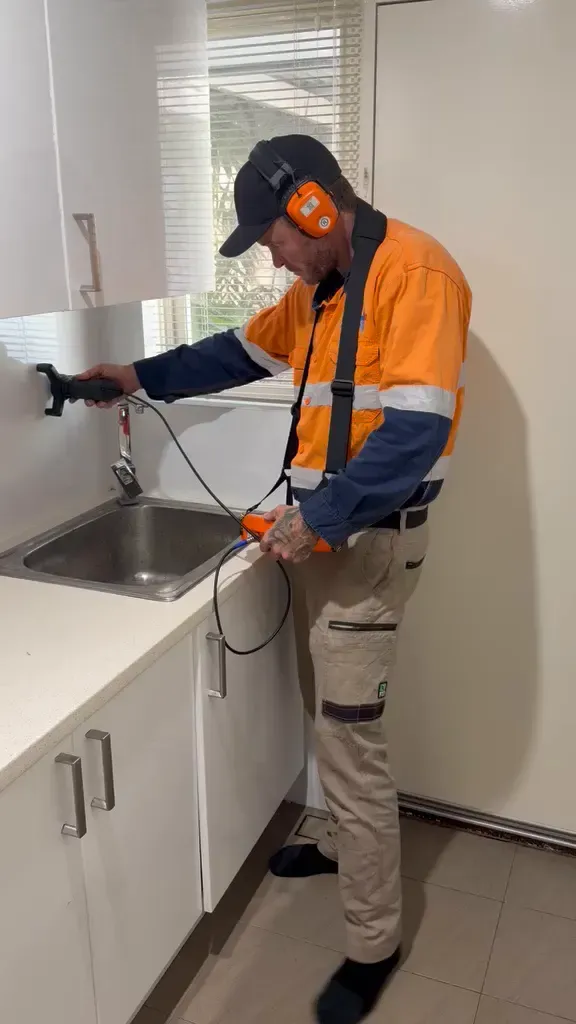
Thermal imaging leak detection in Perth uses a FLIR camera to read the surface temperature of walls, floors and ceilings. A leaking hot water line leaves a warm pattern, and damp often shows cooler than the dry surface around it. We confirm what the camera shows with acoustic, moisture or tracer gas testing before a location goes in your report.
- PL7390 Plumbing Licence
- GF13592 Gas Permit
- Master Plumbers WA
- A Plumbed Right Company
- 5.0 star Google reviews
What a thermal camera actually sees
A thermal camera does not see water. It sees temperature. Each point on the screen is a surface temperature reading, shown as colour.
Hot water escaping a pipe warms the plaster, tile or concrete around it. On screen, that shows as a warm streak or bloom along the pipe route.
Water soaking into a wall or ceiling cools the surface as it evaporates, so damp areas often read cooler than the dry surface next to them.
- Non-contact: nothing is cut or drilled to take a reading
- A whole wall or ceiling in one view
- Findings recorded in your written report
What thermal imaging can and cannot see
Works well on
- Hot water lines in walls and under slabs.
- Ceiling stains from a leak above.
- Damp spreading from a shower or wet area.
- Tracing the route a pipe takes through a wall.
Has limits on
- Depth: it reads the surface only and cannot see a pipe inside a slab.
- Cold water leaks with little temperature difference.
- Deep leaks that never reach the surface as a clear pattern.
- Glossy tile and glass, which reflect heat and can mislead a reading.
A thermal image is a lead, not a location on its own. We confirm it with a second method before we mark anything.
Conditions that help or hurt a thermal survey
A thermal camera reads small temperature differences. Anything that adds its own heat or cold to a surface can hide a leak or imitate one.
Helps the survey
- A clear temperature difference, such as hot water run through a suspected hot line.
- Surfaces that have not been in direct sun.
- Stable room conditions, with heating or cooling off for a while beforehand where practical.
- Furniture and stored items moved back from the walls being scanned.
Hurts the survey
- Afternoon sun on an external wall or roof, which heats the surface evenly and masks small differences.
- Air-conditioning or heater vents blowing across the area.
- Nearby heat sources such as a hot water system, oven, fridge or underfloor heating.
- A floor that has just been mopped, which cools as it dries and can look like damp.
When conditions are poor, the camera still helps narrow the search. It just carries less weight, and the second method carries more.
Patterns that can look like a leak
Part of a thermal survey is ruling out the patterns that are not water. These are the common ones.
Missing or shifted ceiling insulation
Framing behind the plaster
Draughts around doors, windows and vents
Reflections off shiny surfaces
Why we pair thermal with acoustic, moisture and tracer gas
Each method answers a different question. Used together, they turn a warm patch into a confirmed leak location.
FLIR thermal imaging
Moisture readings
Acoustic correlation
Tracer gas
How a thermal scan fits into the visit
-
Create a temperature difference
On a suspected hot water leak, running hot water through the line gives the camera a clear contrast to read.
-
Scan beyond the obvious stain
We scan the rooms around the suspected area, not just the wet patch, because water travels before it shows.
-
Rule out the look-alikes
Insulation gaps, framing, draughts and reflections are checked off so they are not mistaken for water.
-
Confirm with a second method
Any warm or cool pattern is checked with moisture, acoustic or tracer gas testing before it is treated as the leak.
-
Document the finding
The report records the location and the method used, so the repairing plumber and your insurer work from the same evidence.
We find and document the leak. The repair is separate, carried out by a licensed plumber we can coordinate, often through our parent company Plumbed Right.
What the report shows
Every detection job ends with a written report, so the next person does not have to start the search again.
The leak location
How it was found
Photos and the next step
Common jobs for thermal imaging
Hot water leaks in walls and slabs
Shower and bathroom walls
Unexplained water bills
Getting some of the water cost back
Thermal imaging questions
Can a thermal camera see through concrete?
No. It reads the temperature of the surface. A hot water leak under a slab can warm the floor above it enough to show, but the camera does not see the pipe. We confirm slab leaks with acoustic or tracer gas testing.
Does thermal imaging work on cold water leaks?
Sometimes. It needs a temperature difference between the water and the surface. Damp from a cold line can show as a cooler patch, but the contrast is often weak, so acoustic and tracer gas do more of the work.
Can thermal imaging find a leak behind tiles?
Often, yes. The camera reads the temperature of the tile face, and a hot line or damp behind it changes that temperature. Glossy tile reflects heat from the room, so we scan from more than one angle and confirm with moisture or acoustic readings.
Does thermal imaging work in summer?
Yes, but direct sun makes some surfaces harder to read. A west-facing wall or a roof space that has been heated all afternoon can hide the small temperature differences a leak creates. Internal walls and floors are less affected.
Can a thermal camera see mould?
No. It shows temperature, not mould. It can show the damp area that mould grows on, which helps trace the water back toward its source.
Is thermal imaging destructive?
No. The camera takes readings from a distance without touching the surface. Any opening of a wall or floor happens during the repair, which is separate work quoted by the repairing plumber.
How much does thermal imaging leak detection cost?
Thermal imaging is one of the methods used during a leak detection visit, not a separate service. Outdoor hot and cold water leak detection starts at $895 as a fixed price. For indoor leaks, we confirm the scope and price before you book.
Will the report help with an insurance claim?
The report records where the leak was found, how it was found, photos and the recommended repair. Whether a claim is accepted is up to your insurer and your policy. We can also assist with a Water Corporation leak allowance application.
Can you use thermal imaging on a ceiling leak?
Yes. A ceiling stain is often not directly under the source, because water runs along framing before it drips. We scan the surrounding ceiling and the area above it where access allows.
Book my thermal leak check
Tell us where you suspect the leak and whether it is on the hot or cold side. We confirm the scope and price before you book.